
The Struggle of African Nations in Winter Olympics
Even though the Olympics connect the global village, the Winter Games remain a distant dream for Africa, a continent where snow and ice are hard to find. Winter sports face high barriers from the start.
The first African nation to step onto the Winter Olympic stage was South Africa, which sent four figure skaters to the 1960 Squaw Valley Games. However, due to apartheid, the country was isolated from international sports for 34 years, severing its ties with the Winter Olympics.
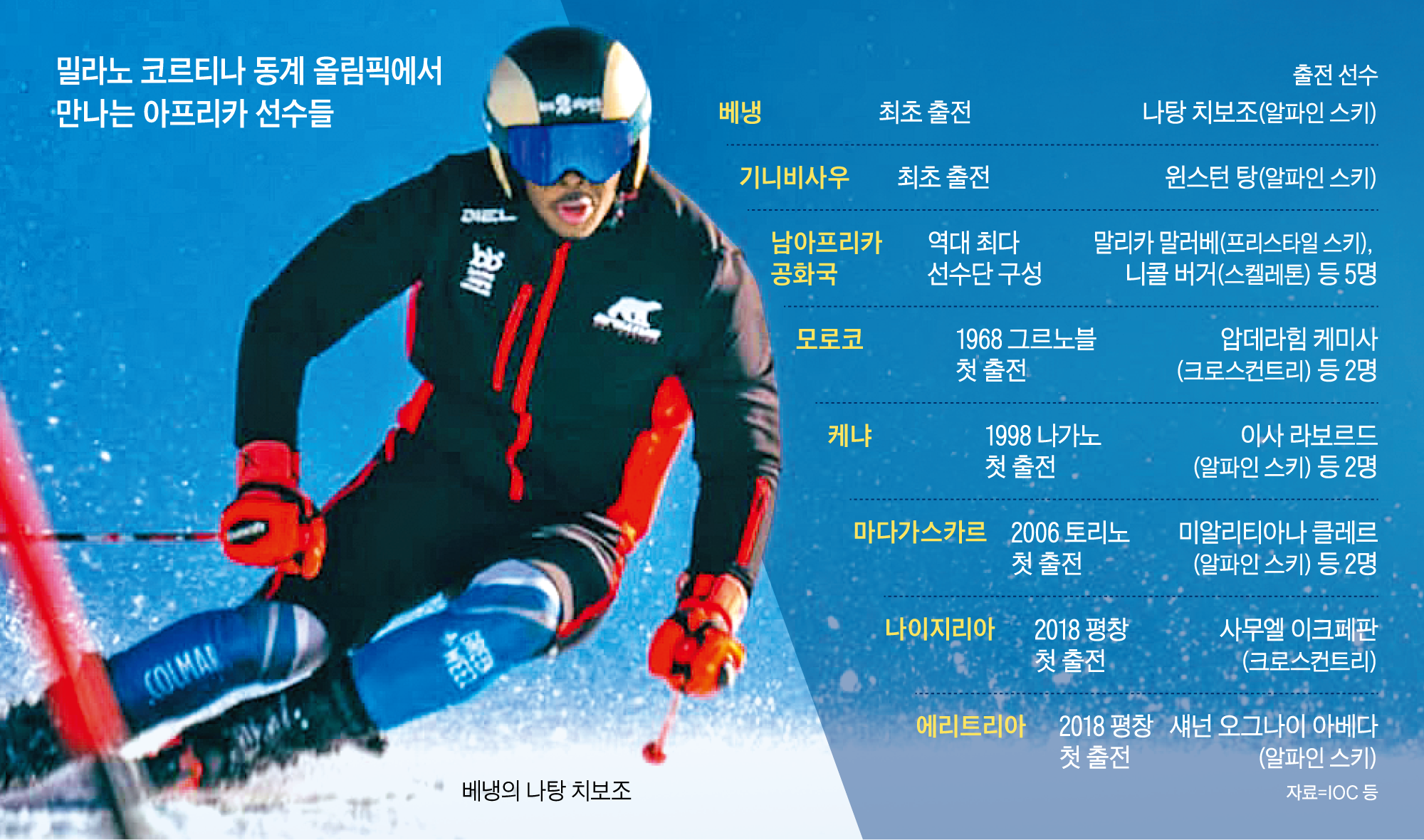
Despite this, Africa has gradually taken steps toward the Winter Games. Morocco dispatched five athletes, including alpine skiers, to the 1968 Grenoble Games. At the 1984 Sarajevo Games, Senegal’s Lamine Guèye became the first Black African athlete in Winter Olympic history, competing in alpine skiing. The 2018 PyeongChang Games, which saw participation from eight African nations for the first time, marked a turning point for winter sports on the continent.
Challenges Faced by African Athletes
No African athlete has yet stood on a Winter Olympic podium. Winter sports are costly due to expensive equipment, and athletes often face long journeys to compete internationally, creating high entry barriers. With events concentrated in North America and Europe, travel and accommodation costs are burdensome. Nations without domestic infrastructure must navigate administrative hurdles—establishing national federations, joining international bodies, and qualifying for the Olympics—processes that take at least two to three years.
Despite these challenges, 15 athletes from eight African countries, a record high, will compete at the 2026 Milan Cortina Games. Many were born and raised in Europe or North America but represent their African roots.
New Faces in the Winter Olympics
Benin and Guinea-Bissau, two small West African nations, achieved their Winter Olympic debuts at these Games. Benin’s alpine skier Nathan Chiabo (22), born in France, initially competed for Togo but switched to Benin after reduced support. Guinea-Bissau’s first Winter Olympian, Winston Tang (20), was born in Oregon to a Guinean-Bissauan father and Taiwanese mother. He previously represented Taiwan but chose to compete for Guinea-Bissau this season.
Madagascar’s Mialitiana Clare (25), adopted by a French family at age one, became the first African woman to compete in three consecutive Winter Olympics. After placing 48th in PyeongChang and 41st in Beijing, she aims to improve her personal best.
Kenya, known as the “nation of marathons,” has two alpine skiers: Sabrina Simader (28) and Isa Laborde (19). Simader, who moved to Austria and became Kenya’s first female Winter Olympian, said, “I wanted to break the stereotype that Kenyans can’t ski.” Laborde, a second-generation immigrant raised in France, chose to represent his mother’s homeland. Eritrea’s Shannon Ogbani Abeda (30), born to a family that fled civil war to Canada, balances engineering studies with alpine skiing. This is her third Olympics.
South Africa’s Strong Delegation
South Africa sends five athletes across four sports—alpine skiing, cross-country skiing, freestyle skiing, and skeleton—the largest delegation from Africa. Nigeria, with a population of approximately 240 million, has only one competitor: cross-country skier Samuel Ikpefan.